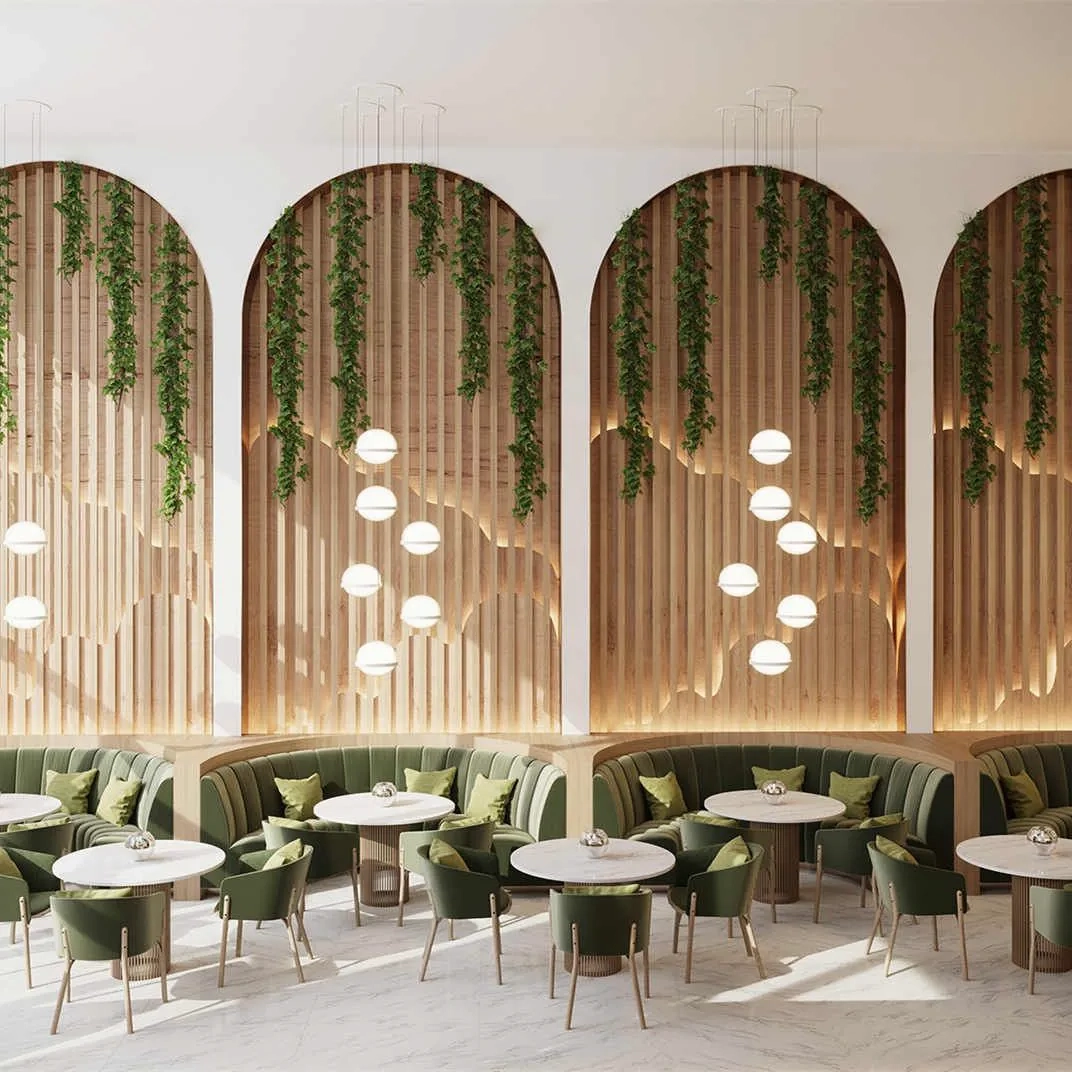
Restaurant interior design is one of the most important factors in attracting customers and creating a memorable first impression. It is not limited to aesthetics alone; it reflects the restaurant’s identity and enhances the guest experience from the moment they walk through the door. As interior design trends continue to evolve, selecting the right colors, lighting, furniture, and space layout has become essential for creating a comfortable and distinctive atmosphere that suits the restaurant’s concept and target audience.
Contents
- 1 How Does Restaurant Interior Design Influence Business Success?
- 2 Essential Elements of Modern Restaurant Interior Design
- 2.1 Choosing the Right Color Palette
- 2.2 Using Modern and Balanced Lighting
- 2.3 Smart Space Planning and Table Arrangement
- 2.4 Selecting High-Quality Materials and Finishes
- 2.5 Aligning the Interior with Brand Identity
- 2.6 Choosing Comfortable and Stylish Furniture
- 2.7 Incorporating Natural Elements
- 2.8 Integrating Modern Technology
- 2.9 Paying Attention to Finishing Details
- 3 How to Choose the Right Restaurant Interior Design Based on Your Concept and Target Audience
- 4 Why Do Investors Choose Point Dos for Restaurant Interior Design and Fit-Out?
How Does Restaurant Interior Design Influence Business Success?
The restaurant industry has become increasingly competitive, and serving delicious food alone is no longer enough to guarantee success. The complete customer experience has become a key factor in building a restaurant’s reputation, and restaurant interior design plays a vital role in achieving that goal.
Every element within the restaurant—from the entrance design to table arrangements and lighting—helps create a welcoming environment that encourages customers to return. A thoughtfully planned interior also highlights the restaurant’s brand identity, strengthening customer loyalty and increasing long-term business success.
The role of interior design goes beyond improving the restaurant’s appearance. It directly affects customer comfort throughout their visit. When colors, lighting, custom furniture, and decorative elements work together harmoniously, guests feel relaxed and enjoy spending more time in the restaurant, making them more likely to return.
Numerous studies also show that the surrounding environment significantly influences how customers evaluate service quality. As a result, an effective restaurant design creates a positive impression even before the first meal is served.
Read also: Commercial Fit Out
Essential Elements of Modern Restaurant Interior Design
Several key elements contribute to successful restaurant interior design, helping your restaurant stand out from the competition.
Choosing the Right Color Palette
Colors are among the first things customers notice. They should complement the restaurant’s concept and appeal to the target audience. Modern restaurant interiors often combine balanced color schemes with bold or neutral accents to create an elegant atmosphere while maintaining a comfortable environment that enhances the dining experience.
Using Modern and Balanced Lighting
Lighting is essential for highlighting interior design details and creating the desired ambiance. Combining natural and artificial lighting with contemporary lighting fixtures adds sophistication while showcasing Decorative Works and furniture in an attractive way.
Smart Space Planning and Table Arrangement
Successful restaurant interior design depends on making efficient use of available space. Proper table arrangements provide customers with privacy while allowing staff and guests to move comfortably. Well-planned layouts also make restaurants appear larger and more organized, even when space is limited.
Selecting High-Quality Materials and Finishes
Carefully chosen materials provide a refined appearance that lasts for years. Modern restaurant designs often combine wood, glass, metal, and marble in a harmonious way while selecting finishes that are durable, easy to clean, and suitable for daily use.
Aligning the Interior with Brand Identity
A successful design reflects the restaurant’s visual identity in every detail, from colors and logos to furniture and decorative accessories. This consistency strengthens brand recognition and gives the restaurant a distinctive personality that customers easily remember.
Choosing Comfortable and Stylish Furniture
Furniture serves both functional and aesthetic purposes. Modern restaurants rely on practical, elegant furniture made from high-quality materials that can withstand continuous use while maintaining their appearance.
Incorporating Natural Elements
Indoor plants and nature-inspired decorative elements bring warmth and vitality to restaurant interiors. Combined with suitable lighting and neutral colors, these features create a calm, contemporary atmosphere.
Integrating Modern Technology
Technology has become an essential part of modern restaurant interior design. Smart lighting systems, digital menus, phone charging stations, and electronic ordering systems not only create a modern appearance but also improve customer convenience and elevate service quality.
Paying Attention to Finishing Details
Small details often leave the strongest impression on customers. Artwork, table settings, decorative accessories, and background music all contribute to the overall atmosphere. When these elements complement the interior design, the restaurant becomes more attractive and delivers a professional guest experience.
How to Choose the Right Restaurant Interior Design Based on Your Concept and Target Audience
There is no universal design that suits every restaurant. Each concept has unique requirements, so interior design should reflect the type of cuisine, service style, and target customers. When the design aligns with the restaurant’s identity and customer expectations, it creates a more engaging and memorable dining experience.
Define Your Restaurant Concept
Start by identifying your restaurant’s style, whether it is fine dining, family-friendly, fast food, or focused on local or international cuisine. Each category requires a different design approach.
Understand Your Target Audience
Restaurant design should match customer preferences. Younger audiences often appreciate modern interiors, vibrant colors, and Instagram-friendly spaces. Family restaurants, on the other hand, benefit from calm environments, spacious layouts, and comfortable seating suitable for all family members.
Choose Suitable Colors and Materials
The choice of colors and materials should reflect the restaurant’s concept. Luxury restaurants often incorporate marble, premium wood, and warm lighting, while contemporary restaurants favor glass, metal, neutral color palettes, and modern design elements.
Design Spaces to Support Operations
Tables, waiting areas, and walkways should be organized to maximize customer comfort while allowing employees to move efficiently. Smart space planning prevents overcrowding and maintains customer privacy without reducing seating capacity.
Prioritize the Customer Experience
Restaurant interior design should focus not only on appearance but also on comfort. Proper lighting, effective ventilation, quality furniture, and controlled noise levels all contribute to customer satisfaction and leave a lasting positive impression.
Maintain a Consistent Brand Identity
Every design element—including colors, logos, decorative features, and menu presentation—should align with the restaurant’s branding. This consistency strengthens the restaurant’s identity and makes it more recognizable among competitors.
Follow Modern Trends Without Overdoing Them
Contemporary interior design trends can add a fresh and modern character to the restaurant, but avoiding short-lived design fads is important. Timeless designs that balance aesthetics, functionality, and easy maintenance remain attractive for years while allowing future updates when needed.
Why Do Investors Choose Point Dos for Restaurant Interior Design and Fit-Out?
Restaurant investors seek an interior design company capable of transforming ideas into successful commercial spaces that combine visual appeal with operational efficiency. Point Dos achieves this through a comprehensive approach that begins with understanding the client’s requirements and business concept, followed by planning, design, execution, and final project delivery.
The company follows the Total Design approach, integrating planning, resource selection, budget management, and execution into one streamlined process, ensuring exceptional quality throughout every project stage.
With more than 11 years of experience in interior design and fit-out, Point Dos has successfully completed over 352 projects and served more than 150 clients. This experience demonstrates the company’s ability to manage commercial projects professionally while maintaining quality standards and meeting project deadlines.
Point Dos carefully oversees every detail, from selecting premium materials and finishes to supervising on-site execution, ensuring restaurants that combine distinctive branding, customer comfort, and long-term sustainability.
Rather than relying on ready-made concepts, Point Dos begins each project by understanding the investor’s vision, space requirements, and target audience before developing a fully customized design that maximizes space efficiency.
We provide comprehensive restaurant interior design and fit-out solutions tailored to the unique vision of every investor. Supported by our experienced team, we help clients create modern restaurant spaces that leave lasting impressions and contribute to long-term business success.